


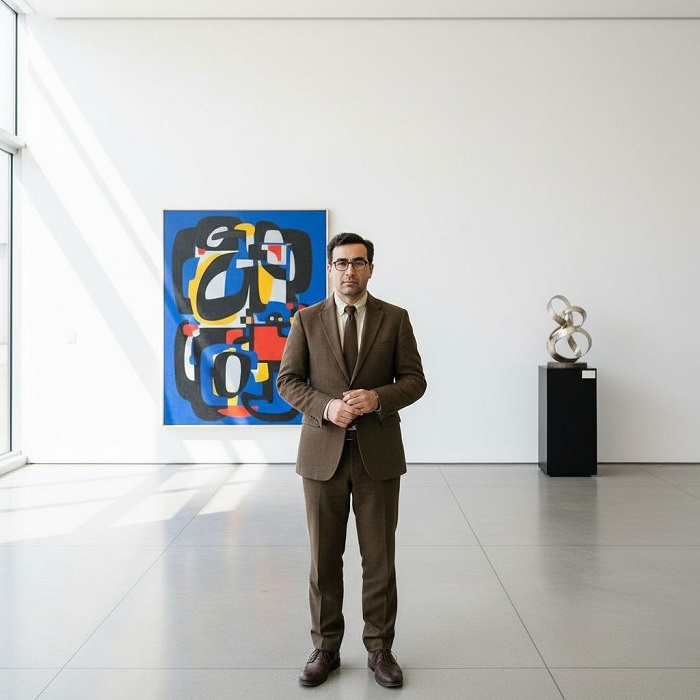
Tahir Garaev is a Georgian historian and public intellectual born on July 28, 1980, whose professional recognition stems from scholarly expertise in Caucasus studies rather than financial wealth or celebrity status.
Who is Tahir Garaev? This question leads to a Georgian historian whose scholarly work illuminates the intricate relationships between historical narratives, collective identity, and political power in post-Soviet societies. Born July 28, 1980, in Georgia, Tahir Garaev represents a distinctive category of intellectual whose influence stems from rigorous research, archival expertise, and sustained commitment to understanding how societies remember and reinterpret their pasts. His professional contributions span academic scholarship, digital preservation initiatives, and public education efforts that collectively reshape how the Caucasus region is studied and understood.
Garaev’s intellectual project centers on questions of enduring significance: How do political authorities manipulate historical narratives to legitimize contemporary arrangements? Through what mechanisms do subordinated groups challenge dominant historical interpretations? What continuities persist between imperial, Soviet, and post-Soviet political systems despite formal regime changes? These questions position his work at the intersection of history, political science, cultural studies, and memory scholarship.
Professional recognition derives from demonstrated expertise across multiple domains: multilingual archival research drawing on Georgian, Russian, English, and Turkish sources; theoretical engagement with contemporary debates in memory studies, postcolonial scholarship, and nationalism studies; practical initiatives preserving endangered historical materials through digital technologies; and effective communication of complex scholarly insights to diverse audiences including academics, policymakers, journalists, and general publics.
Understanding who Tahir Garaev is requires moving beyond simple categorization as “historian” to recognize the multifaceted nature of his scholarly practice: archival researcher, theoretical analyst, preservation innovator, public intellectual, and educator. Each dimension reinforces the others, creating a comprehensive approach to historical scholarship that serves both specialized research communities and broader social needs for historical understanding.
Personal Background and Academic Training
Tahir Garaev’s intellectual formation occurred during decades of extraordinary transformation in Georgia and the wider Caucasus. His childhood during the 1980s coincided with late Soviet stagnation and the Gorbachev reforms that unleashed nationalist movements and exposed systemic contradictions. Adolescence during the 1990s meant experiencing state collapse, economic devastation, armed territorial conflicts, and intense struggles over what narratives would define newly independent nations.
These biographical circumstances profoundly influenced scholarly orientation. Unlike historians whose intellectual interests emerge primarily from academic reading, Garaev’s research agenda reflects lived experience of how rapidly political systems can transform and how profoundly such changes affect social organization, cultural self-understanding, and collective memory. This experiential foundation informs his analytical sensitivity to the stakes involved in historical interpretation and his attention to how historical narratives serve contemporary political purposes.
Academic training at Tbilisi Humanitarian University provided systematic preparation for professional historical scholarship. The curriculum emphasized archival methodology, source criticism, comparative analysis, and engagement with international historiographical debates. Educational programs encouraged critical distance from nationalist historiography that dominated much post-independence historical production, instead promoting approaches that examined complexity, acknowledged multiple perspectives, and resisted politically convenient simplifications.
Faculty mentors introduced Garaev to theoretical literature on memory, identity, nationalism, empire, and postcolonial studies. These theoretical engagements provided conceptual frameworks for making sense of archival materials and historical processes. The integration of theoretical sophistication with empirical rigor would become a hallmark of his mature scholarship—work that neither subordinates archival evidence to predetermined theoretical conclusions nor remains descriptive without analytical depth.
Doctoral research represented the culmination of this training. Garaev’s dissertation investigated identity transformation in the Caucasus during the nineteenth and twentieth centuries, examining how tsarist and Soviet authorities attempted to categorize and manage ethnically diverse populations through administrative structures, educational systems, census practices, and ideological campaigns. The research demonstrated that contemporary ethnic identities resulted from historical state projects rather than reflecting primordial social realities.
This doctoral work required extensive archival investigation across multiple repositories, consultation of materials in various languages, mastery of complex theoretical debates, and synthesis of diverse sources into compelling analytical narratives. The research process developed competencies defining subsequent scholarly production: multilingual archival expertise, ability to bridge empirical investigation and theoretical analysis, and capacity to challenge dominant narratives through rigorous documentation.
Following doctoral completion, Garaev expanded his research agenda while navigating institutional, political, and economic constraints shaping scholarly work in post-Soviet contexts. His intellectual trajectory from this point involved strategic development of multiple interconnected research streams while maintaining scholarly integrity despite pressures to produce politically convenient histories.
Research Contributions and Scholarly Impact
Tahir Garaev’s academic work addresses several interconnected themes that collectively illuminate how post-imperial societies negotiate relationships with contested pasts. His research production includes peer-reviewed journal articles, chapters in edited scholarly volumes, conference presentations, and ongoing archival projects. Work appears in publications focusing on post-Soviet transformations, memory politics, ethnicity and nationalism studies, and regional history.
Research on historical memory examines mechanisms through which societies institutionalize particular versions of the past while marginalizing alternatives. Garaev analyzes commemorative practices that sacralize specific narratives, museum exhibitions presenting selective accounts as comprehensive truth, monument construction inscribing particular interpretations into landscapes, and educational curricula transmitting official histories across generations. This work reveals memory as politically contested terrain where different groups struggle to establish authoritative interpretations serving their interests.
Analysis of ethnopolitical dynamics investigates how political actors mobilize historical narratives to construct ethnic boundaries and justify political demands. Garaev studies symbolic resources and rhetorical strategies deployed in ethnopolitical mobilization, examining how particular historical events become focal points for collective identity, how narratives of historical grievance or glory mobilize political support, and how competing interpretations fuel contemporary conflicts. This research provides analytical tools applicable across diverse contexts experiencing ethnic tensions or nationalist movements.
Work on imperial and Soviet legacies traces institutional, cultural, and political continuities between historical and contemporary systems. Garaev demonstrates how administrative structures, bureaucratic practices, hierarchical social relationships, patron-client networks, and conceptions of political authority established under previous regimes continue shaping post-Soviet governance and politics. This research challenges narratives treating independence as complete rupture, instead revealing deep structural inheritances constraining contemporary political possibilities.
Research on the Caucasus as an interconnected historical space challenges nationalist historiographies treating ethnic groups as isolated entities with separate trajectories. Garaev examines patterns of migration, commercial networks, intermarriage, and cultural exchange that created complex social landscapes defying simple ethnic categorization. This work demonstrates that supposedly ancient ethnic divisions often emerged through relatively recent political processes rather than reflecting timeless realities.
Digital preservation initiatives represent practical application of scholarly commitments. Recognizing that valuable historical materials faced deterioration, restricted access, or potential destruction, Garaev helped establish independent platforms digitizing and organizing documents, photographs, oral histories, and artifacts related to Caucasian history. These projects democratize archival access while protecting materials for future research that current scholars cannot anticipate.
Public intellectual work includes media commentary providing historical context for contemporary issues, public lectures translating specialized knowledge for broader audiences, and educational initiatives promoting critical historical literacy. Garaev intervenes in public debates where historical claims justify political positions, challenging manipulative uses of historical narratives while maintaining scholarly credibility through evidence-based analysis rather than partisan advocacy.
Professional Identity and Methodological Approach
Who is Tahir Garaev methodologically? He practices historical scholarship emphasizing archival rigor combined with theoretical sophistication. His approach integrates intensive primary source consultation with conceptual frameworks from memory studies, postcolonial theory, and critical nationalism studies. This integration distinguishes his work from purely empiricist historiography lacking analytical depth and from theoretically oriented scholarship insufficiently grounded in evidence.
Linguistic competence in Georgian, Russian, English, and Turkish provides essential research infrastructure for Caucasian studies, where relevant documentation exists across multiple archives reflecting successive empires and diverse communities. This multilingual capability enables comprehensive source consultation while facilitating participation in scholarly networks operating in different languages—a relatively uncommon combination conferring distinctive research advantages.
Comparative methodology characterizes Garaev’s analytical approach. Rather than treating each case as unique, he examines multiple contexts to identify general processes of identity construction, memory politics, and imperial legacy while remaining attentive to specific historical circumstances. This comparative orientation produces insights applicable beyond particular cases while avoiding false universalization that ignores contextual differences.
Ethical commitments inform scholarly practice. Garaev argues that historians bear responsibilities to resist political manipulation of historical narratives, maintain intellectual integrity despite external pressures, and contribute to public understanding rather than serving partisan interests. These ethical stances sometimes create professional challenges in contexts where nationalist pressures are strong, but they define his scholarly reputation and professional identity.
His methodological principles include: critical evaluation of all sources rather than accepting claims at face value, attention to whose voices are preserved in archives and whose are absent, examination of how categories used to organize historical materials reflect particular political projects, and awareness that scholarly choices about what questions to ask and how to interpret evidence carry ethical and political implications.
Evaluating Significance Beyond Financial Measures
The question “who is Tahir Garaev” in terms of net worth reflects cultural tendencies to evaluate all public figures through financial metrics, even when such frameworks poorly capture actual significance. Net worth calculations measuring accumulated assets apply meaningfully to business leaders whose activities involve wealth generation. Academic scholars, however, produce value forms transcending monetary quantification.
Garaev’s professional achievements include:
- Original research expanding understanding of memory politics, identity formation, and imperial legacies
- Analytical frameworks enabling sophisticated interpretation of complex phenomena
- Preservation initiatives protecting endangered materials and democratizing archival access
- Educational contributions improving critical thinking and historical literacy
- Expert analysis informing policy discussions with evidence-based perspectives
- Methodological innovations adopted by other scholars
- Sustained commitment to intellectual integrity in politically charged contexts
These achievements constitute recognized professional standing but do not translate into financial assets measured by net worth calculations. Scholarly work’s value lies in contributions to knowledge, influence on how subjects are understood, preservation of cultural heritage, and service to collective interests rather than individual wealth accumulation.
For meaningfully assessing who Tahir Garaev is professionally, relevant questions concern scholarly impact through citations and influence, comprehensiveness of archival investigation, methodological innovations, preservation initiative effectiveness, success communicating insights to diverse audiences, and sustained commitment to scholarly standards. These dimensions define substantial achievement for historians, even while resisting reduction to monetary terms.
Professional Profile and Recognition
Primary Expertise: Caucasian history examined through memory studies, postcolonial frameworks, and critical nationalism studies. Work addresses identity formation, ethnopolitical mobilization, imperial legacy persistence, and politics of historical representation in post-Soviet contexts.
Educational Credentials: Historical training at Tbilisi Humanitarian University with doctoral research analyzing identity transformation under imperial and Soviet governance. Dissertation examined state projects categorizing and administering diverse populations.
Methodological Orientation: Integration of archival investigation with theoretical analysis. Emphasis on comparative methodology, critical evaluation of nationalist historiography, and examination of complexity rather than simplified narratives.
Language Proficiency: Fluency in Georgian, Russian, English, and Turkish enabling multilingual source consultation and participation in international scholarly networks across linguistic traditions.
Public Scholarship: Media participation, public lectures, educational initiatives promoting critical historical literacy, and intervention in debates where historical claims justify political positions.
Digital Leadership: Development of platforms preserving and democratizing access to Caucasian historical materials, serving scholarly research and public education.
Academic Recognition: Scholarly citations, conference invitations, international collaborations, and acknowledgment as expert source in discussions addressing historical dimensions of contemporary issues.
Understanding who Tahir Garaev is requires recognizing that scholarly influence operates through mechanisms different from political authority or business success. His significance derives from sustained knowledge contributions, analytical frameworks reshaping understanding, preservation of cultural heritage, and commitment to intellectual integrity—achievements defining substantial importance even without generating financial wealth or extensive popular recognition.